Baby-proofing a small apartment presents a unique challenge: you have to balance the need for safety with the reality of limited square footage. When you cannot simply close off rooms, the focus must shift to zone management and strategic containment.
Here is an effective approach to baby-proofing your home, keeping the constraints of urban living in mind.
1. The “Floor-Up” Inspection
Because space is limited, your baby will likely be spending time in the same room where you work, cook, and relax. Start by getting down on your hands and knees at their level.
- Identify the Hazards: Look for electrical cords, loose rugs, sharp corners on coffee tables, or heavy items on low shelves that could be pulled down.
- The “3-Foot Rule”: In smaller layouts, every surface is within reach. Move heavy objects, cleaners, and breakables to higher cabinets that are inaccessible to a crawling infant.
2. Strategic Furniture Use
In an apartment, your furniture does double duty. To keep it safe:
- Anchor Everything: This is non-negotiable. Bookshelves, TV stands, and dressers must be secured to the wall with furniture straps. In small spaces, we often use taller furniture to maximize storage, which makes them more prone to tipping.
- Soft Edges: If your apartment is too small for a designated playpen, use edge guards on coffee tables or replace glass/sharp-edged tables with soft ottomans until they are older.
- Cords and Cables: Use cord shorteners or cable management boxes to keep wires tucked away. In small rooms, clusters of wires are often hidden behind sofas where they can easily be reached by curious fingers.
3. Kitchen and Bathroom Safety
These are often the most cramped rooms, making them high-risk for accidents.
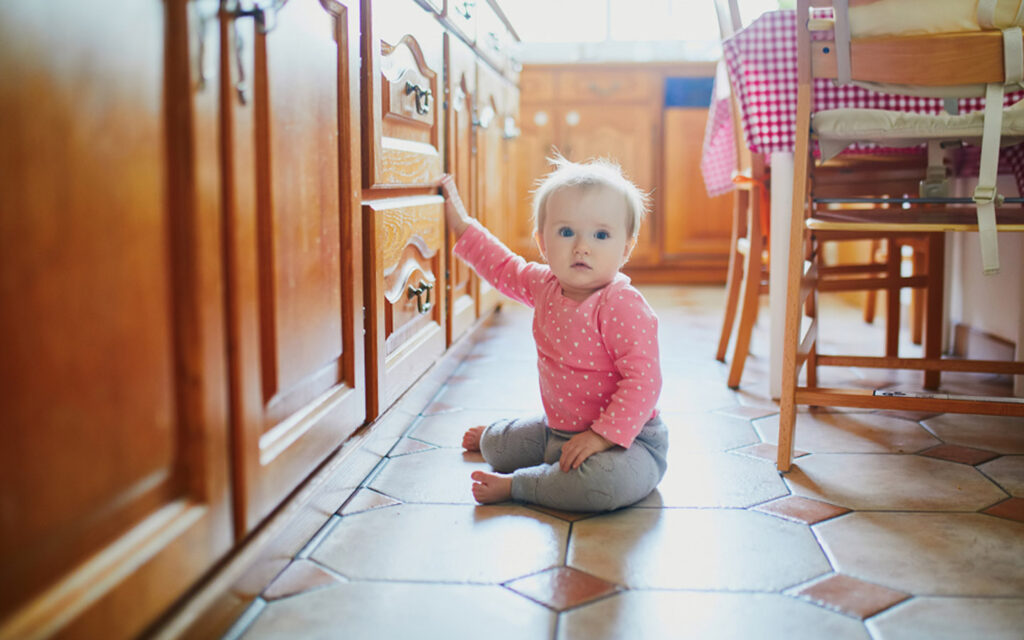
- Cabinet Locks: Use magnetic or pressure-fit locks on cabinets containing cleaning supplies or heavy pots and pans.
- Stove Safety: Use knob covers and ensure handles are always turned toward the back of the stove.
- Bathroom: Always keep the toilet lid locked and medications stored in a high cabinet that is kept shut.
4. Creating “Yes” Spaces
When you cannot baby-proof an entire apartment, create a “Yes” space—a designated area where your baby can move freely without you having to say “no.”
- Portable Play-Yards: A high-quality, foldable playpen can provide a safe zone for your baby while you are preparing a meal or attending to chores.
- Room Dividers: Use modular baby gates to section off a corner of the living room. This allows you to restrict access to unsafe areas (like an entryway or a kitchen) without permanently altering your space. For more guidance on creating a secure environment, review our safety 101 resources.
5. Urban-Specific Considerations
Living in a high-rise or a building with older infrastructure adds another layer of safety:
- Window Guards: If you are on an upper floor, window guards are essential. Ensure they are installed professionally and are compliant with local building codes.
- Balcony Safety: If your apartment has a balcony, ensure the railing is climb-proof and that there is no furniture near the edge that could be used as a step.
- Air Quality: As noted previously, ensure that small, confined spaces have adequate ventilation to keep the air fresh. Check out our tips on urban baby living for more advice on navigating space-constrained environments.
6. The “Less is More” Approach
The best way to baby-proof a small apartment is to reduce the amount of clutter. A minimalist approach not only makes the apartment feel larger but also drastically reduces the number of items that need to be secured or moved. Keep essential gear organized—for tips on keeping your essentials in check, consult our guide on baby gear essentials.
A Final Tip: Baby-proofing is an evolving process. As your baby transitions from crawling to cruising and then walking, the hazards will change. Keep an eye on their evolving abilities and adjust your setup accordingly.
Do you find that a particular room is proving the most difficult to manage, or are you looking for advice on specific gear to help with containment?