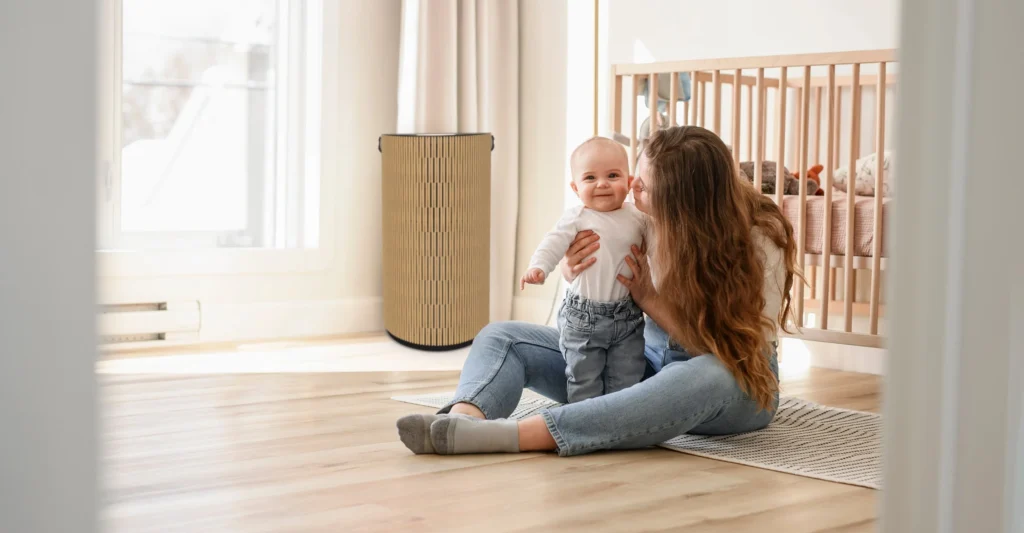
Living in an older apartment can present unique challenges for maintaining healthy indoor air quality (IAQ) for infants. Because infants breathe more air per pound of body weight than adults and spend most of their time in the “breathing zone” (the area from the floor to three feet high), they are uniquely susceptible to pollutants that may be trapped in older buildings (Laquatra, 2019; Laquatra, 2023).
Common Risks in Older Apartments
Older buildings often have specific characteristics that can compromise air quality:
- Dampness and Mold: Older structures may have chronic issues with moisture, leaks, or inadequate seals, which create ideal conditions for mold and bacteria growth. Exposure to mold is strongly linked to increased risks of wheezing, asthma, and respiratory infections in infants (Holden et al., 2023).
- Legacy Building Materials: Older apartments may still contain hazardous materials such as asbestos (often found in older insulation) or lead-based products. These should only be addressed by trained professionals (Laquatra, 2023).
- Inadequate Ventilation: Older windows or lack of modern exhaust systems can make it difficult to cycle out indoor pollutants. Conversely, “tightening” an apartment—such as adding heavy weatherstripping—without increasing mechanical ventilation can trap pollutants like formaldehyde (often found in pressed-wood furniture or older cabinetry) inside the home (Holden et al., 2023; Adamkiewicz, 2013).
- Pests and Dust: Disrepair can allow pests to enter, and poor ventilation can contribute to higher concentrations of dust mites, which are common respiratory irritants (Holden et al., 2023).
Practical Mitigation Strategies
You can take proactive steps to monitor and improve the air quality in your home:
- Control Moisture: Keep indoor relative humidity between 30% and 60% to discourage mold growth (Laquatra, 2023). Use exhaust fans when cooking or bathing, and ensure these fans vent to the outdoors rather than just circulating air back into the room.
- Source Control: Identify and remove sources of pollution. This includes avoiding indoor smoking, minimizing the use of air fresheners, and opting for low- or no-VOC (Volatile Organic Compound) cleaning products and paints (Laquatra, 2019; Laquatra, 2023).
- Ventilation: Whenever possible and when outdoor air quality is good, open windows to flush out indoor contaminants. If you live in an area with high outdoor pollution, consider using an air purifier with a high-quality filter (e.g., HEPA) to help capture fine particulate matter (Holden et al., 2023).
- Regular Maintenance: Ensure that any fuel-burning appliances (like gas stoves or heaters) are serviced regularly to prevent carbon monoxide and nitrogen dioxide buildup (Laquatra, 2023; Dimitroulopoulou, 2020).
- Keep the Floor Clean: Since infants spend significant time near the floor, regular vacuuming (with a HEPA filter, if possible) can help reduce the buildup of dust, dander, and other particles in their primary breathing zone (Laquatra, 2023).
When to Consult Professionals
If you suspect your home has significant issues like hidden mold, asbestos, or lead, consult a professional for testing and abatement. If your baby experiences persistent respiratory symptoms, such as unexplained wheezing, coughing, or frequent infections, consult your pediatrician, as these can be clinical indicators of poor environmental conditions (Holden et al., 2023).
References
- Adamkiewicz, G. (2013). Indoor air quality in green-renovated vs. non-green low-income homes of children living in a temperate region of US (Ohio). CDC Stacks.
- Aithal, S. S., Sachdeva, I., & Kurmi, O. P. (2023). Air quality and respiratory health in children. Breathe, 19(2), 230040. https://doi.org/10.1183/20734735.0040-2023
- Cited by: 146
- Dimitroulopoulou, S. (2020). Indoor air quality and health. The Institution of Environmental Sciences.
- Holden, K. A., Lee, A. R., Hawcutt, D. B., & Sinha, I. P. (2023). The impact of poor housing and indoor air quality on respiratory health in children. Breathe, 19(2), 230058. https://doi.org/10.1183/20734735.0058-2023
- Cited by: 160
- Laquatra, J. (2019). Indoor Air Quality. In Indoor Environmental Quality. IntechOpen. https://doi.org/10.5772/intechopen.81192
- Cited by: 10
- Laquatra, J. (2023). Indoor Air Quality in Homes. International Journal of Engineering Technology and Informatics, 4(3). https://skeenapublishers.com/journal/ijeti/IJETI-04-00059.pdf
- Cited by: 2